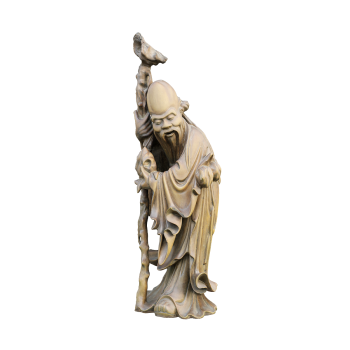
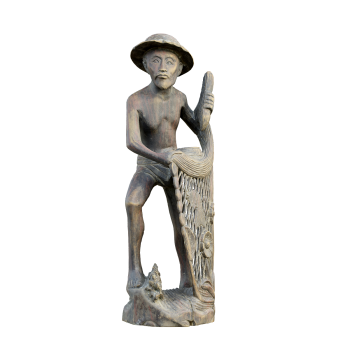
Cloth bag monk stone statue
The original name of this, is a tourist monk in the Five Dynasties period. Its prototype legend is a monk who behaved grotesquely and beamed alms in Zhejiang. He often uses a wooden stick to carry a pocket to beg around and put the begging items in his pocket, hence the name "cloth bag monk". It is said that the monk Buca is the incarnation of Maitreya. His actions and words are full of Zen. His image and stories are widely circulated among the people and become an important figure in Buddhist culture. The image is often depicted as potty-bellied and smiling, which is related to the tolerant, optimistic and humorous image he gives. His stories and images have an important place in Buddhist culture.
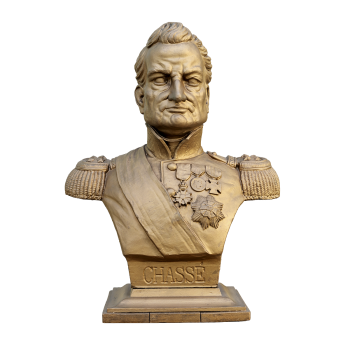
GeneraalChass Bronze Bust
GeneraalChass was a Dutch military figure whose career was filled with adventure. Initially, he worked for Dutch patriots, French revolutionaries, and Emperor Napoleon. After 1814, he switched to serving the Netherlands. In 1832, he commanded the city's forts during the French siege of Antwerp, thus gaining the status of national hero, and was subsequently appointed commander of the Breda fortress. He died in 1849 and was buried in the Ginneken cemetery. In 1899, the municipality of Breda offered a bust of this GeneraalChass.
The Head of Van Gogh-The Creations of Andrea Schaller
Andre Schaller is a Swiss artist known for his deep understanding of Vincent van Gogh and his unique artistic style. His work "The Head of Van Gogh" is a tribute to Van Gogh's legendary life, showing Van Gogh's complex emotional and spiritual world through sculpture. It is not only a reproduction of Van Gogh's appearance, but also a profound interpretation of his inner world. Through the texture and form of the sculpture, the viewer can feel Van Gogh's pain, passion and endless pursuit of art. This work is often seen as an exploration of Van Gogh's spiritual dimension and a reflection on his dual identity as an artist and an individual.
Chinese Zodiac - Pig Statue
The pig in the Chinese zodiac symbolizes wealth, good luck, and honesty. In traditional Chinese zodiac culture, the twelve earthly branches corresponding to the pig are "Hai", hence also known as "Hai Pig". With its gentle personality and rich image, it is regarded as a symbol of abundance and harvest. In the legends of the twelve zodiac animals, it appears with its simple, cute, and carefree image. Legend has it that in the process of selecting zodiac animals, although pigs move slowly, they ultimately succeed in obtaining their zodiac position through their honesty and kindness. In Chinese culture, the Year of the Pig is often considered a year full of opportunities and prosperity, suitable for accumulating wealth and enjoying life.
Chinese Zodiac - Dog Statue
Symbolizing loyalty, courage, and integrity. In traditional Chinese zodiac culture, the twelve earthly branches corresponding to dogs are called "xu", hence also known as "xu dog". He is regarded as the most loyal friend of humanity due to his loyalty to humanity and natural instinct to protect his homeland. In the legends of the twelve zodiac animals, it appears in the form of loyalty and bravery. It is said that in the process of selecting zodiac animals, with his firm will and unremitting efforts, he successfully obtained the position of zodiac animal. In Chinese culture, the Year of the Dog is often considered a year full of loyalty and protection, suitable for establishing solid interpersonal relationships and maintaining family harmony. It is also associated with the word 'wang'.
Twelve Zodiac Animals - Chicken Statue
Symbolizing diligence, punctuality, and honesty. In traditional Chinese zodiac culture, the twelve earthly branches corresponding to the rooster are "You", hence also known as "You Ji". With its characteristic of waking up early and singing, it is regarded as a symbol of the beginning of a new day, representing brightness and hope. In the legends of the twelve zodiac animals, it appears in the image of diligence and punctuality. It is said that in the process of selecting zodiac animals, with his unremitting efforts and persistence, he successfully obtained the position of zodiac animal. In Chinese culture, the Year of the Rooster is often considered a year full of opportunities and challenges, suitable for diligent work and proactive progress. It is also associated with "auspiciousness" because "chicken" sounds similar to "auspiciousness".
Chinese Zodiac - Monkey Statue
Symbolizing wit, flexibility, and liveliness. In traditional Chinese zodiac culture, the twelve earthly branches corresponding to the monkey are "Shen", hence also known as "Shen Monkey". Due to its intelligence, wit, and playful nature, it is regarded as a symbol of wisdom and skill. In the legends of the twelve zodiac animals, it appears in the form of wit and agility. According to legend, in the process of selecting zodiac animals, with his flexible skills and clever mind, he cleverly utilized the help of other animals and ultimately won the position of zodiac animal. In Chinese culture, the Year of the Monkey is often considered a year full of vitality and creativity, suitable for pursuing new ideas and challenges. Often appearing in art and folklore
Chinese Zodiac - Sheep Statue
Represents gentleness, kindness, and auspiciousness. In traditional Chinese zodiac culture, the twelve Earthly Branches corresponding to the sheep are called 'Wei', hence also known as' Wei sheep '. In Chinese culture, it is usually associated with peace, prosperity, and harvest. In the legends of the twelve zodiac animals, they are loved by people for their gentle nature and social characteristics. According to legend, in the process of selecting zodiac animals, he successfully obtained the position of zodiac with his kind personality and benefits to humanity. In Chinese culture, the Year of the Sheep is often considered a harmonious and peaceful year, suitable for socializing, building relationships, and pursuing inner peace. It is also an important sacrifice in sacrificial activities.
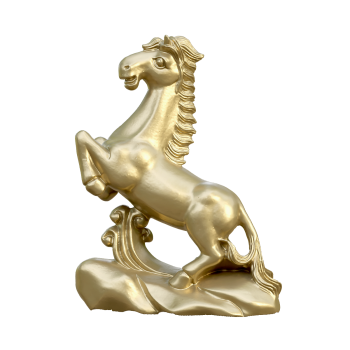
Chinese Zodiac - Horse Statue
Symbolizing vitality, resilience, and success. In traditional Chinese zodiac culture, the twelve Earthly Branches corresponding to the horse are called "Wu" and are therefore also known as "Wu Ma". With its elegant posture, fast pace, and loyal nature, it is regarded as a symbol of strength and freedom. In the legends of the twelve zodiac animals, it appears in the image of loyalty and diligence. According to legend, in the process of selecting zodiac animals, he won people's respect and admiration with his indomitable spirit and outstanding endurance, thus occupying an important position in the zodiac. In Chinese culture, it is often associated with heroes and warriors, symbolizing courage and fighting spirit. It is a year full of vitality and motivation
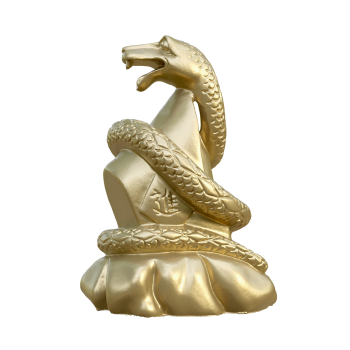
Chinese Zodiac - Snake Statue
The snake in the Chinese zodiac symbolizes wisdom, prudence, and mystery. In traditional Chinese zodiac culture, the twelve earthly branches corresponding to snakes are "Si", hence also known as "Si Snake". In Chinese culture, there are complex and ever-changing symbols of both negative cunning and toxicity, as well as positive wisdom and healing power. In the legends of the twelve zodiac animals, snakes appear in their clever and agile form. According to legend, in the competition for selecting zodiac animals, snakes successfully obtained their position in the zodiac through their wisdom and strategy. In Chinese culture, the Year of the Snake is often considered a year that requires caution, but it is also seen as a period full of changes and opportunities.
Chinese Zodiac - Dragon Statue
It is a symbol of great mystery and high status in Chinese culture, representing power, nobility, and good luck. In the Twelve Earthly Branches, the dragon corresponds to "Chen" and is therefore also known as "Chenlong". In traditional Chinese culture, it is a symbol of auspiciousness and also a symbol of emperors, representing supreme status and authority. In the legends of the twelve zodiac animals, the dragon is known for its extraordinary power and magical ability to change, and is regarded as a divine beast that can summon wind and rain and control the weather. Legend has it that in the process of selecting zodiac animals, dragons, with their extraordinary abilities and divinity, have won people's respect and worship, thus occupying a prestigious position in the zodiac.
Twelve Zodiac Animals - Rabbit Statue

Symbolizing gentleness, caution, and wit. In traditional Chinese zodiac culture, the twelve earthly branches corresponding to the rabbit are "mao", hence also known as "mao tu". With its gentle nature and agile movements, it is regarded as a symbol of harmony and beauty. In the legend of the twelve zodiac animals, rabbits have won people's love for their wit and kindness. Legend has it that in the competition for selecting zodiac animals, the rabbit, with its wit and agility, successfully overcame obstacles and obtained a position in the zodiac. In Chinese culture, it is often associated with the moon because there is a story in ancient Chinese mythology about the jade rabbit pounding medicine, which is considered an auspicious and beautiful year.
Popular Models
Random Model
Panther nymph 3D animation model
909 View
SAPI Forest Winch
990 View
3D animated model of grey mackerel shark
1540 View
Japanese grass lizard
737 View
Asian Giant Mantis
859 View
Elephant (with 3D animated model)
1270 View
Swedish Vasaorden Royal Barge
726 View
French AMX-30 main battle tank
871 View